The SIAVED joint waste management syndicate is entering a new administrative phase after electing its president, vice-presidents and delegated councillors on May 21. The remaining step is the installation of permanent and mandatory committees, whose full membership and main priorities will be announced on June 30, ahead of a working seminar scheduled for November 13. The transition marks the start of a crucial term for waste management in the southern part of the department, where local authorities must make major choices about waste, wastewater and drinking water policy.
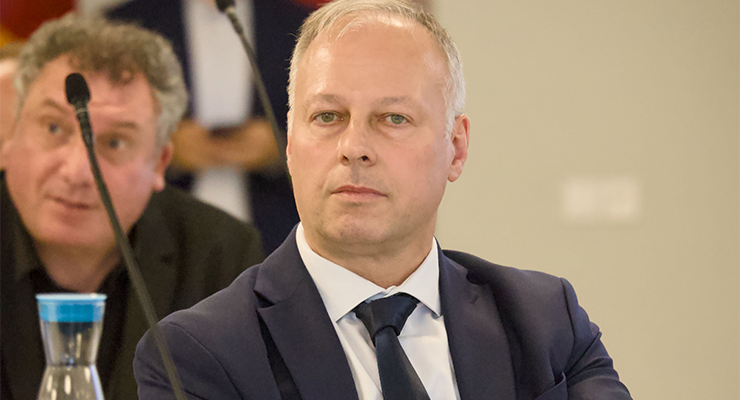
New president Fabrice Piette says the coming mandate will be defined by difficult but necessary decisions. Since January 1, 2024, SIAVED has expanded from three intermunicipal bodies to seven, giving the organization a broader reach and stronger regional visibility. Its priorities are to reduce waste production, improve sorting, cut down sorting rejects, and continue recovering waste through incineration. Piette says these objectives are closely linked and will shape the syndicate’s strategy over the next several years.
Among the biggest projects are works planned at the Douchy-les-Mines waste-to-energy plant and the Saint-Saulve facility, while work at the Maubeuge site is already underway. SIAVED’s challenge is to reduce the amount of waste sent for incineration without undermining the financial model that supports its operations. Electricity generated from incineration is sold back into the grid, helping balance the syndicate’s budget. A sharp drop in tonnage would reduce those revenues, making it harder to finance ongoing and future investments.
To address this, Piette says SIAVED must both lower waste volumes and maintain enough supply to keep its plants operating efficiently. One possible solution is to sign agreements with more clients across Hauts-de-France, allowing the syndicate to process waste from outside its current area. SIAVED is also in talks with the last intermunicipal authorities in the south of the department that have not yet joined the organization. Officials are also considering the syndicate’s optimal size, though no final decision has been taken.
The broader regional context could work in SIAVED’s favor. With higher taxes on waste, especially landfill disposal, more local authorities may be pushed to seek incineration capacity elsewhere. In that scenario, SIAVED could become a fallback partner for nearby territories lacking their own facilities. That would strengthen its role in the region while also helping it preserve financial stability.
For the 2026-2033 term, SIAVED has chosen eight thematic committees: waste-to-energy, sorting, district heating, human resources, collection, recycling centers, prevention and communication. Two mandatory committees have also been set up: the tender commission, made up of Jean-Michel Denhez, David Bustin, Patrice Bricout, Marc Barsoum and Jérémy Richard, and the public service delegation commission, composed of Jean-François Delattre, Michel Raout, Georges Flamengt, Evelyne Tommasi and Emmanuel Lococciolo.