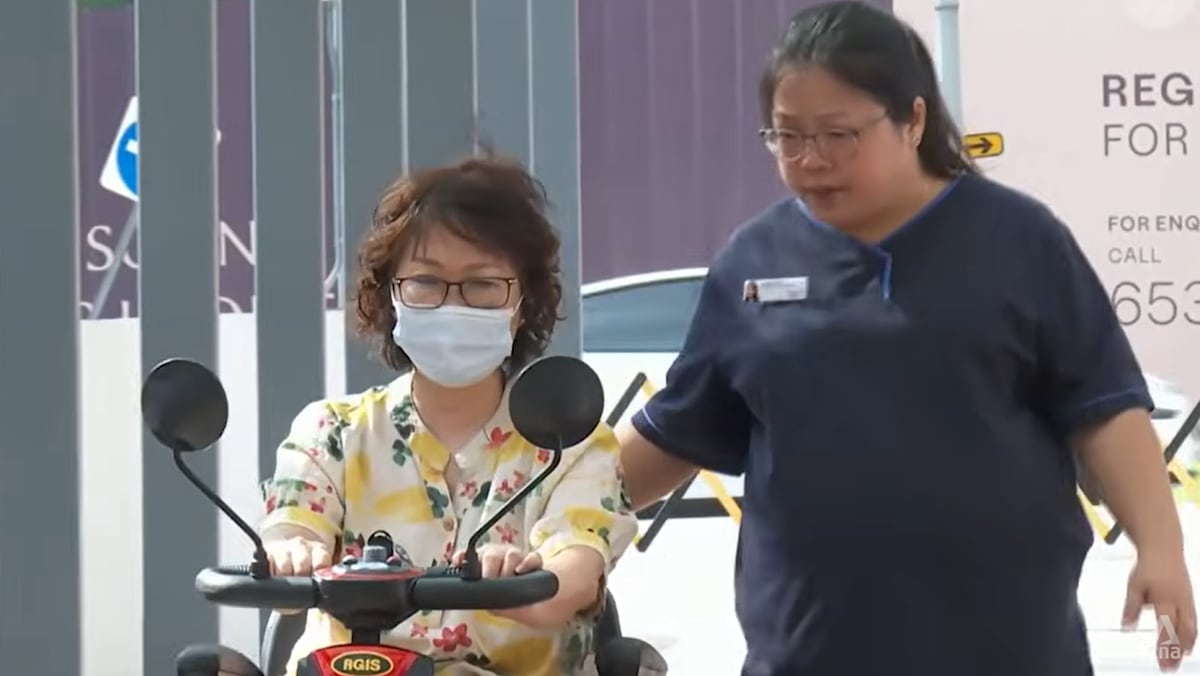
Singapore’s tightened rules for personal mobility aid users have prompted a rise in assessments at hospitals, as occupational therapists say safe operation remains difficult for some older people and those with multiple health conditions. The new requirements, which took effect on Monday, June 1, require PMA users to obtain a certificate of medical need from a Singapore-registered doctor or occupational therapist unless they qualify for an exemption, such as being aged 70 and above. The Land Transport Authority says more than 1,000 certificates have already been issued.
At Tan Tock Seng Hospital, occupational therapists have been seeing around 20 to 25 patients a week in the weeks leading up to the new rules, an increase of about 35 per cent from several months earlier. The therapists assess whether patients can operate motorised scooters safely, and in some cases the users are referred after already receiving a certificate from a doctor. However, the certificate can still be rejected if the occupational therapist determines that the user does not have the cognitive ability or road readiness to use a PMA safely.

Therapists said that while the certification system is intended to improve safety, some users need more than a standard medical check. Older adults and people with complex medical conditions may require closer evaluation, practice and training before they can handle a PMA confidently in public spaces. This is especially important because PMAs can move at speeds and in environments that demand quick judgment, balance and awareness of surrounding traffic and pedestrians.
The article highlights the tension between mobility and safety for a growing group of users who depend on PMAs for daily movement. For some patients, the device is essential for independence, but therapists caution that the physical and cognitive demands of operating one should not be underestimated. The certification process is therefore being used not only to confirm a medical need, but also to identify whether the person can use the device safely.
As the new rules settle in, hospitals and therapists are expecting ongoing demand for assessments. The rise in patient referrals before the deadline suggests that many users are seeking approval to continue using their devices under the new framework. At the same time, the ability of therapists to reject certificates underscores that medical need alone is not enough; safe operation remains a separate concern.
The changes reflect a broader effort to tighten oversight of PMA use in Singapore, especially for users who may be more vulnerable to accidents because of age, illness or reduced cognitive function. Occupation therapists say the goal is not to restrict access unnecessarily, but to ensure that those who use PMAs on roads and footpaths can do so responsibly and safely.