Brooklyn Personal Injury Attorney Samantha Kucher Explains How to Protect Your Rights After an Accident

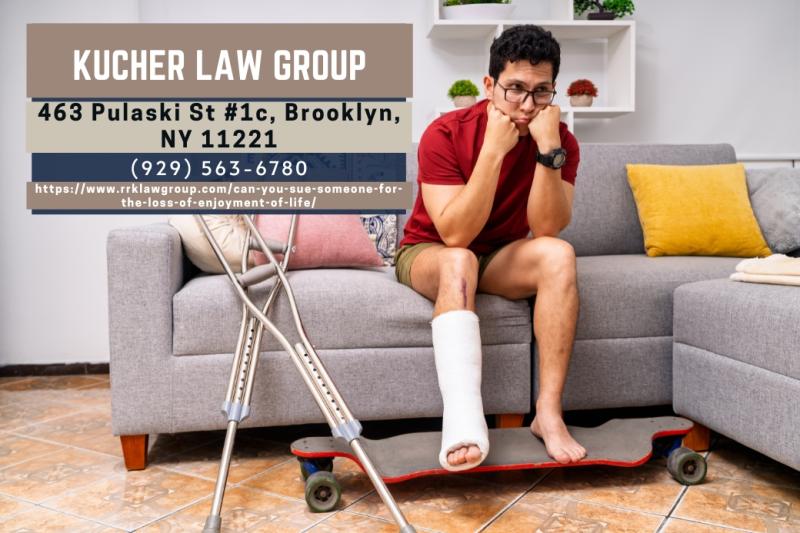
Brooklyn personal injury attorney Samantha Kucher of Kucher Law Group says injured New Yorkers may be entitled to compensation not only for medical bills and lost wages, but also for the loss of enjoyment of life after an accident. The firm explains that this type of loss is recognized under New York law as part of non-economic damages, which are typically included within a broader pain-and-suffering award rather than treated as a separate claim.
Kucher says loss of enjoyment of life applies when an injury prevents a person from taking part in hobbies, sports, travel, family gatherings, work-related activities, and other personal pursuits that once shaped daily life. She notes that the value of such damages is highly personal because it depends on who the injured person was before the accident and what kinds of activities are no longer possible afterward. The article points to New York case law, including McDougald v. Garber, as the basis for this approach.


The firm distinguishes loss of enjoyment of life from pain and suffering. Pain and suffering cover physical pain, emotional distress, anxiety, depression, and other harms caused directly by the injury. Loss of enjoyment focuses on the practical effect of the injury on a person’s lifestyle and ability to participate in meaningful activities. Severe injuries such as spinal cord damage, traumatic brain injuries, amputations, burns, and chronic pain conditions can all lead to these claims when they create lasting limitations.
For car accident cases, Kucher says New York’s no-fault insurance system creates an additional legal hurdle. In most vehicle accidents, injured people first turn to their own Personal Injury Protection coverage for medical expenses and lost wages, but that coverage does not pay for loss of enjoyment of life. To seek those damages from another driver, the injured person must meet New York’s serious injury threshold under Insurance Law 5102(d). That threshold includes injuries such as fractures, significant disfigurement, permanent loss of use of a body function or member, and injuries that prevent normal daily activities for at least 90 days during the first 180 days after the crash.
Because these claims are subjective, Kucher says strong documentation is essential. The firm recommends that injured people record their limitations as soon as possible after the accident, before memories fade and before the evidence becomes harder to prove. Useful proof can include medical records, physician testimony, specialist evaluations, life-care planning reports, vocational rehabilitation opinions, and statements from family, friends, and coworkers who can describe how the injury changed the person’s daily life. Photos and videos showing activities before and after the injury can also help demonstrate the loss.
New York generally does not cap non-economic damages in most personal injury cases, so compensation depends on the facts, including the person’s age, pre-injury lifestyle, severity of the injury, permanence of the condition, and the activities that can no longer be performed. Kucher Law Group says timely legal action is also important because most personal injury claims must be filed within three years, medical malpractice claims within two years and six months, and claims against New York City or other municipalities may require a Notice of Claim within 90 days.
Kucher Law Group serves injured clients in Brooklyn, Kings County, and the greater New York area.