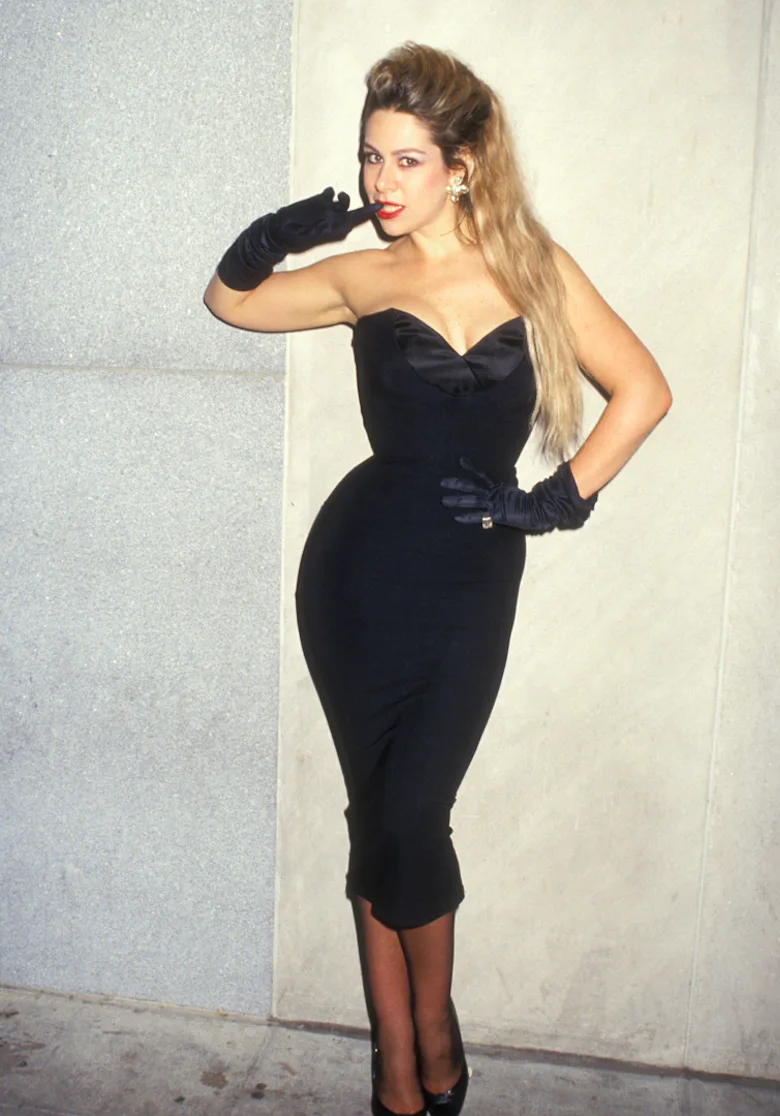
Dianne Brill’s story is a New York nightlife origin tale shaped by style, instinct, and reinvention. Raised in Tampa, Florida, she stood out early with a sharp eye for fashion and a sense that she did not belong in her hometown. In the early 1980s, she discovered a basement store filled with unworn 1940s clothing, bought everything she could, and brought the vintage pieces to New York, where she sold them at Patricia Field’s boutique and Trash & Vaudeville. That decision led her into downtown Manhattan’s club world and, soon after, into the orbit of Studio 54, the Mudd Club, and Danceteria.
Brill became one of the defining figures of 1980s and early-1990s New York nightlife, known for her charisma, glamour, and easy ability to make people feel seen. Andy Warhol called her the “Queen of the Night,” and her presence in gossip columns and party coverage helped establish a template for fame built on visibility, style, and social magnetism. Long before the internet age, she was already a celebrity for being a celebrity, moving through parties, fashion events, and club scenes with a mix of confidence and accessibility. Promoters sent her around the world to host events, and her life reflected a moment when downtown culture, low rents, and high creativity made experimentation possible.
Her upbringing in Florida also shaped her. Brill describes Tampa as beautiful and vivid, and says her parents influenced her taste: her mother collected newspapers and magazines, while her father had strong style. She says growing up in the South gave her resilience and taught her not to freeze when challenged. By her teens, she knew she did not fit in and left for New York, where her look and attitude finally made sense.
Brill’s reputation extended beyond nightlife. She turned her image into business opportunities, including a menswear label, a cosmetics line, and television work. She also became a muse and runway presence for designers such as Thierry Mugler and Jean Paul Gaultier. Mugler especially embraced her figure and personality, making her one of his favorite models and even commissioning shoes to subtly increase her height. Her image was used for mannequins, and she toured internationally with them. She also appeared in major fashion shows and was part of a scene where designers, supermodels, artists, and club kids mixed freely.
Her social world included Warhol, Keith Haring, Fran Lebowitz, Betsey Johnson, Grace Jones, Dolly Parton, Kim Cattrall, and others who defined New York’s creative elite. Brill describes those years as an era when every night felt like a major event and when the city allowed people to create, travel, take risks, and reinvent themselves.
After spending years in Europe raising her three children, Brill returned permanently to New York in 2022. She remains active in art, fashion, and nightlife, and says the city still offers freedom and possibility.


/https://i.s3.glbimg.com/v1/AUTH_59edd422c0c84a879bd37670ae4f538a/internal_photos/bs/2026/r/A/xshBn5QeG7pt9DBExIJQ/imagem-cortada-36-.jpg "Penal Police Officer Flees Bangu After Breaking Through Internal Affairs Checkpoint")