Elephant That Astonished Scientists by Recognizing Its Reflection Dies at 55, Sparking Global Debate in the Bronx

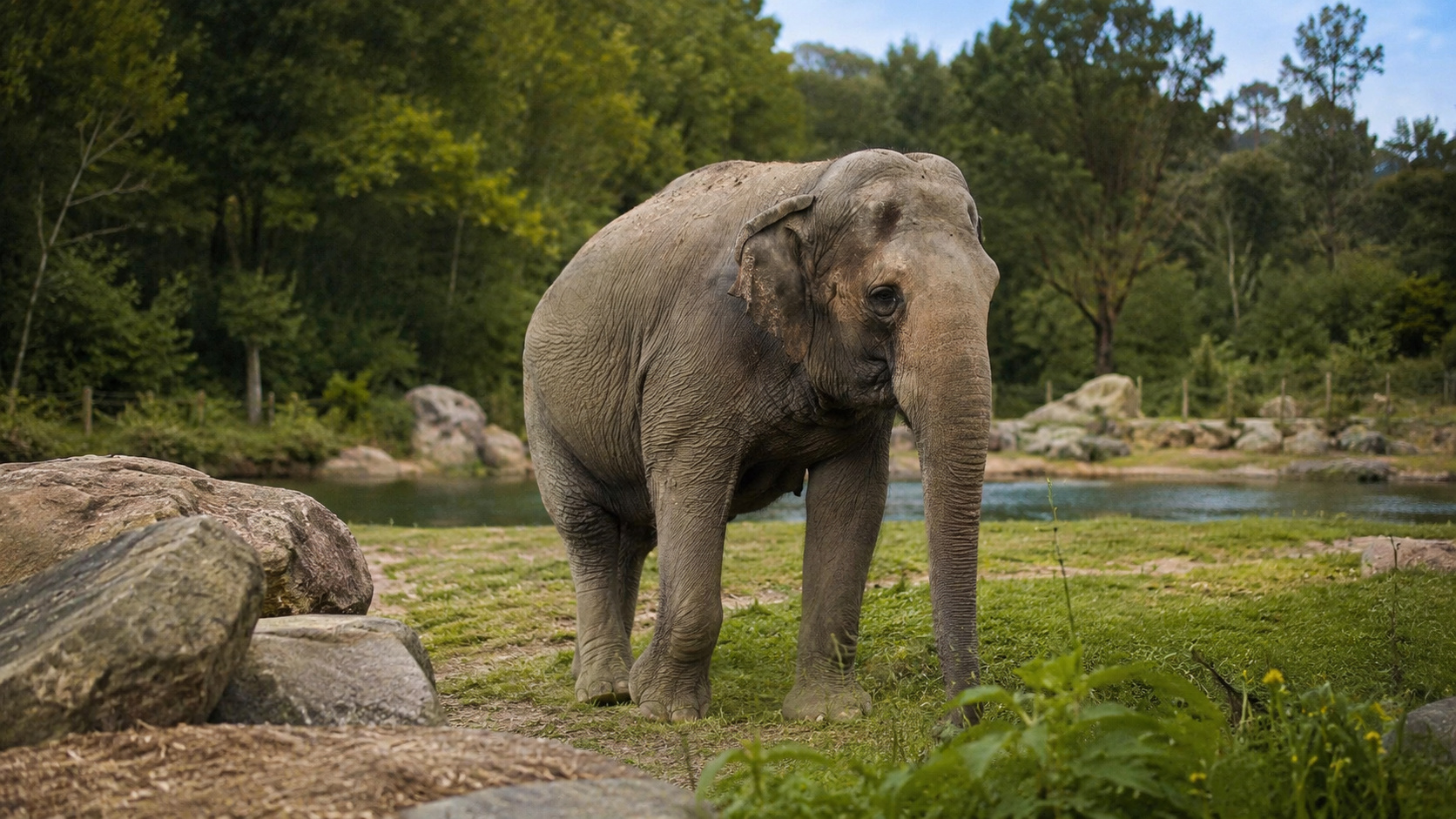
Happy, the Asian elephant that lived for nearly five decades at the Bronx Zoo in New York, has died at age 55 after the zoo said her health declined because of age-related conditions. The zoo announced that Happy was euthanized on Tuesday, May 26, 2026, after recent signs of kidney and liver function loss. A necropsy later found arthritis and large uterine tumors that could not be treated. Her death has renewed debate about animal captivity, intelligence, science, and the ethics of keeping highly social species in zoos.
Happy became widely known in 2005 after taking part in a landmark mirror-recognition study that suggested elephants can identify themselves. In the experiment, she repeatedly touched an “X” painted above her eye after seeing it in a mirror, behavior interpreted as evidence of self-awareness. The test made Happy a reference point in research on animal cognition and placed elephants among the few species believed to possess this level of awareness.
/https://i.s3.glbimg.com/v1/AUTH_bc8228b6673f488aa253bbcb03c80ec5/internal_photos/bs/2026/R/U/MoAX0BTdmUdNbDAdluCA/afp-20260528-b4cr7kh-v1-highres-fbllibertadorespalmeirasjunior.jpg "Brazilian Série A Round 18 Predictions: ge Commentators’ Betting Picks")

Born in Asia, Happy was brought to the United States as a calf at about one year old and arrived at the Bronx Zoo in 1977. She spent almost 50 years there and became one of the zoo’s best-known residents. Keepers said she responded strongly to human interaction and especially enjoyed treats such as watermelon and strawberries. Zoo officials described her as an ambassador for elephants and for wildlife conservation.
Happy’s life also became the center of a major legal battle over animal rights. In 2018, the Nonhuman Rights Project filed a lawsuit seeking to have her recognized as a legal “person” and moved to a sanctuary. The New York Court of Appeals rejected the request in a 5-2 decision, and the Colorado Supreme Court later issued a similar ruling in another case involving zoo elephants. The case drew national attention, with two New York judges writing dissents and one calling Happy’s captivity “inherently unjust and inhumane.”
The Bronx Zoo defended its care for Happy, saying she had constant supervision and access to space for swimming, foraging, and other natural behaviors. Officials argued that moving her after decades in the zoo could have caused stress and harmed her health. In her final weeks, Happy reportedly chose to stay in a barn and outdoor area away from public view while staff provided food, hydration, and pain management.
With Happy’s death, Patty, age 57, remains the last elephant on public display in New York City. The Wildlife Conservation Society stopped acquiring elephants two decades ago, and zoo officials will now review whether Patty should remain there after 53 years at the institution. Happy leaves behind a complicated legacy as both a scientific milestone and a symbol of the ongoing debate over how intelligent animals should live in captivity.