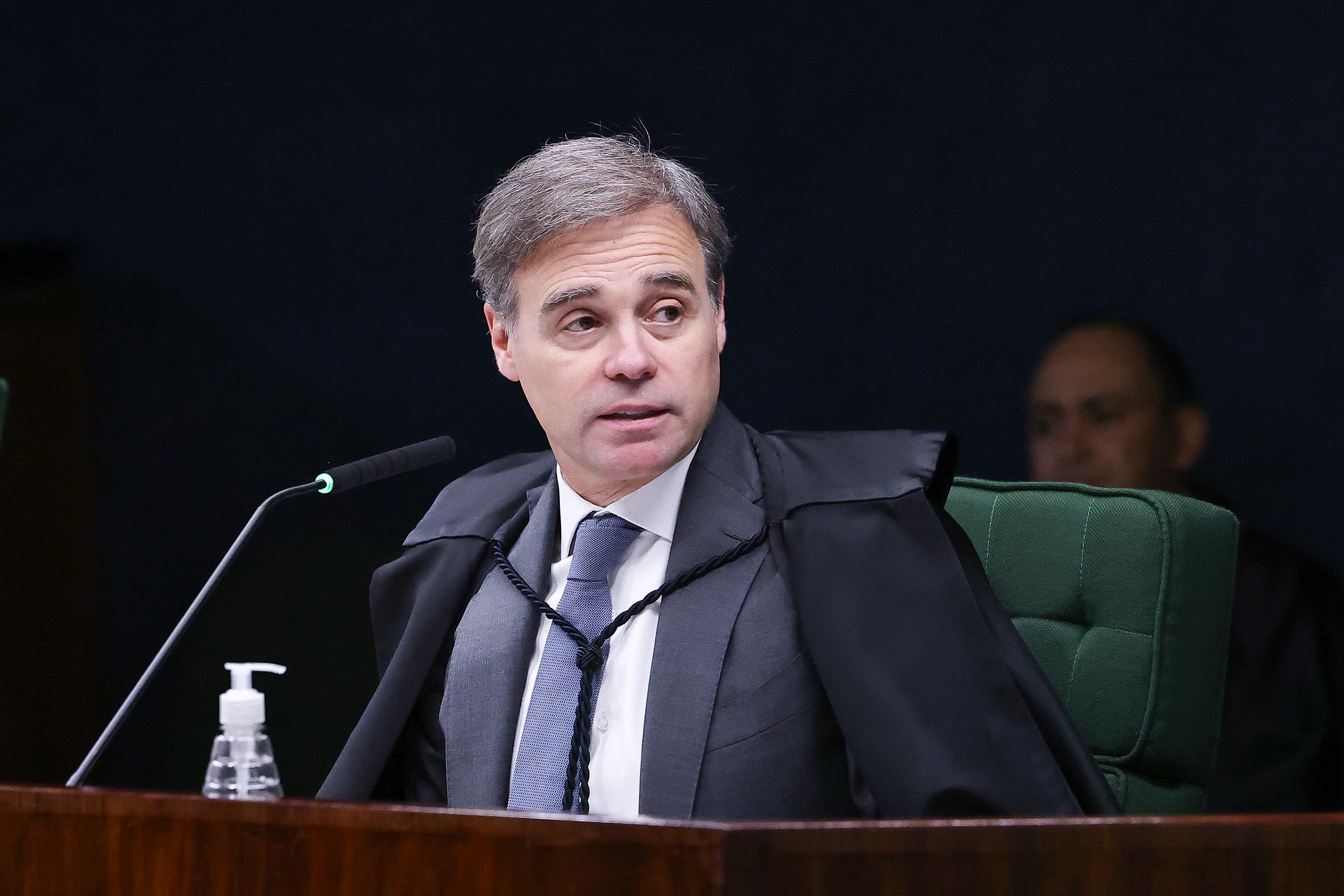
Brazil’s Supreme Federal Court (STF) struck down another part of the pension reform approved in 2019 under former President Jair Bolsonaro, ruling against the minimum age requirement for special retirement benefits granted to workers exposed to harmful or unhealthy conditions. The decision, issued in early June, came in the direct action for unconstitutionality filed by the National Confederation of Industrial Workers (CNTI) and was approved by a narrow 6-5 vote in ADI 6309.
The majority agreed that imposing a minimum age on special retirement was unconstitutional because it undermined the purpose of the benefit. Under the prevailing view, expressed by Justice André Mendonça, special retirement was designed to remove workers from unhealthy environments as soon as possible, not to keep them exposed to harmful agents for longer periods. Justices Nunes Marques, Dias Toffoli and Cármen Lúcia joined that position. STF President Edson Fachin and retired Justice Rosa Weber also found the rule unconstitutional.

The case had begun in virtual session in 2024, but Mendonça asked for review, sending it to the full court. The rapporteur, retired Justice Luís Roberto Barroso, voted to dismiss the challenge entirely. Justices Gilmar Mendes, Alexandre de Moraes, Luiz Fux and Cristiano Zanin sided with Barroso and upheld the pension reform changes, but they were outvoted. The parties may still file motions for clarification.
Although the court overturned the minimum age rule, it preserved other key changes introduced by the 2019 reform. The STF kept the new calculation formula for special retirement benefits, which is less favorable to retirees than the previous system. Before the reform, the benefit was based on the average of the highest 80% of contribution salaries since 1994. After the reform, all contribution salaries since July 1994, or since the start of contributions to the National Social Security Institute (INSS), are included. The benefit now starts at 60% of the average wage, with an additional 2% added for each year of contribution beyond the minimum required period.
The court also maintained the reform’s limits on converting special work time into common contribution time. Before 2019, workers who later moved to non-hazardous jobs could convert years spent in harmful conditions into extra contribution time using a multiplier of 1.40 for men and 1.20 for women. That rule was eliminated by the reform, and the STF kept the restriction, allowing conversion only for special work performed up to November 13, 2019.
The transitional point system for workers already contributing in 2019 was also left intact. Under that rule, age and contribution time are added together at the time of the request, with the required score varying according to the level and duration of exposure, ranging from 66 to 86 points.
With the ruling, eligibility for special retirement again depends on proving habitual and permanent exposure to harmful conditions for the required period, which can range from 15 to 25 years depending on the occupation. Eligible professions may include doctors, nurses, dentists, laboratory and X-ray technicians, industrial workers, metallurgical workers, welders, boiler operators, miners, security guards, gas station attendants, and refinery workers.



/https://i.s3.glbimg.com/v1/AUTH_5dfbcf92c1a84b20a5da5024d398ff2f/internal_photos/bs/2026/7/b/i7ZhckSpKs8o9N9lj6xA/contigo-2-.jpg "Isabela Garcia’s daughter admits jealousy of her mother’s scenes with Leticia Colin in soap opera: “I don’t like to watch”")


