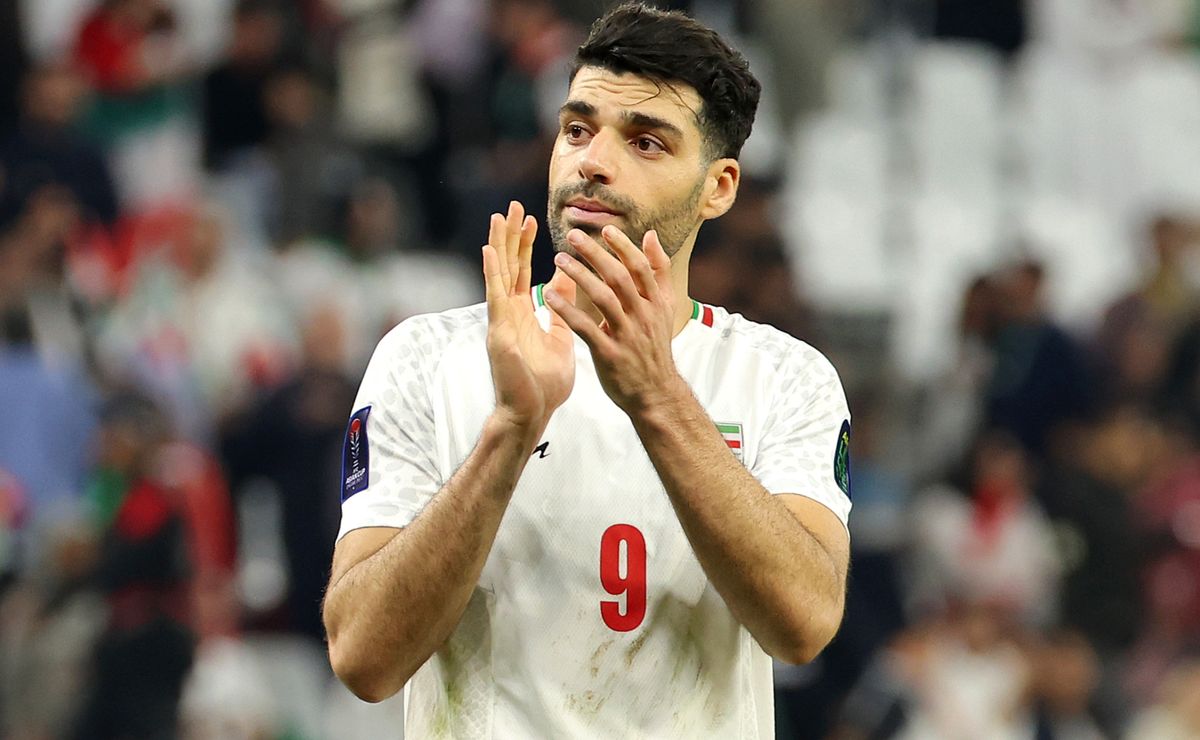
Iran enters the 2026 tournament with a clear goal: to reach the knockout stage for the first time in its World Cup history. Despite being one of Asia’s strongest national teams, with three continental titles and seven previous appearances on football’s biggest stage, Team Melli has never progressed beyond the group phase. This year’s campaign, however, arrives with unusual optimism, as Iran brings a well-balanced squad, a settled tactical identity, and strong momentum from qualification.
Under coach Amir Ghalenoei, Iran usually plays in a disciplined 4-2-3-1 system built around defensive organization, compact spacing, and fast counter-attacks. The team is comfortable sitting deep, absorbing pressure, and then breaking forward quickly when possession is regained. During Asian qualifying, Iran showed control against regional opponents, averaging 55% possession and producing 18.99 expected goals. It also excelled at pressing high, winning the ball in the final third 4.7 times per match. Those numbers suggest a team with structure and intelligence, although matching that level against elite World Cup opposition will be far more demanding.

Ghalenoei, known as “The General,” is in his second spell as Iran’s head coach. A former Esteghlal midfielder with a highly decorated domestic coaching record, he is respected for his pragmatic, results-focused style. His approach has helped steady the national side and deliver another successful qualification run, but the 2026 tournament will be his defining test on the global stage. His ability to adapt tactically against stronger teams may determine whether Iran can finally overcome its long-standing World Cup ceiling.
The team’s most important player remains Mehdi Taremi. The experienced forward is Iran’s main attacking reference point and its most reliable source of goals and creativity. Now 33 and playing for Olympiacos after previous spells in top European football, Taremi brings experience, movement, hold-up play, and finishing quality. With more than 60 international goals, he is central to Iran’s hopes of converting limited chances into decisive results. If he is unavailable or contained, Iran’s attack could lose much of its threat.
Iran reached the tournament through a dominant qualifying campaign, finishing top of Group A in the AFC third round with 11 wins, four draws, and only one defeat across 16 matches. Defensively, the side was outstanding, conceding just six goals and keeping clean sheets in more than half of its games. Offensively, it scored 35 goals and showed strong efficiency in front of goal. A qualifying draw against Uzbekistan sealed its place in North America and reinforced the image of a team built on resilience and consistency.
In Group G, Iran faces Belgium, Egypt, and New Zealand. Belgium is likely the toughest opponent, while New Zealand offers the best opportunity to collect three points. The meeting with Egypt may prove decisive in the battle for second place and a place in the knockout rounds. Iran’s chances will depend on defensive discipline, sharp transitions, and the ability of its senior players to deliver under pressure. If those elements come together, this could be the tournament in which Team Melli makes history.