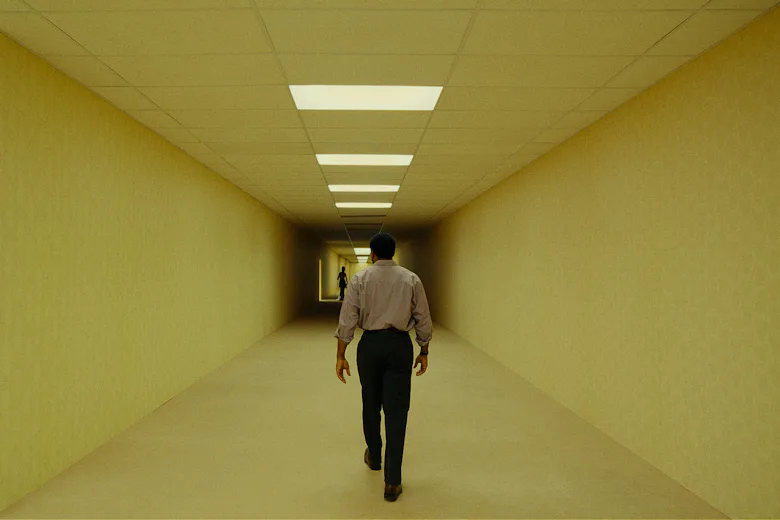
A24’s horror film Backrooms has become the studio’s biggest release to date, turning a once-internet-only image into a major movie event. Based on the “backrooms” creepypasta, which began with a 2019 4Chan post of an empty fluorescent-lit hallway, the film expands a simple piece of online horror into a full cinematic world. The original image, reportedly taken in 2002 at an abandoned furniture store in Wisconsin, inspired a wave of user-generated stories, videos, and online mythology that grew into a popular internet subculture.
Directed by 20-year-old Kane Parsons, who first developed the concept through YouTube shorts and Blender animations, Backrooms is set in a liminal space that feels both ordinary and deeply unsettling. The story follows Clark, a failed architect and alcoholic played by Chiwetel Ejiofor, who manages a struggling furniture store and discovers an endless yellow corridor beneath it. As he explores the strange labyrinth with coworkers and later draws in his therapist, played by Renate Reinsve, the backrooms begin to consume the boundaries between their real lives and the eerie alternate space.


Production designer Danny Vermette, known for work on Longlegs and The Monkey, helped shape the film’s visual identity by blending the mythology of the backrooms with a 1990s aesthetic. The production used massive amounts of set dressing, including tens of thousands of square feet of yellow wallpaper and carpet spread across multiple soundstages. Vermette said the goal was to make the backrooms feel cohesive, beautiful, and disturbing at the same time, while also tying the strange interior world to the emotional decay of the characters’ everyday lives.
The film draws heavily on the concept of liminal spaces—vacant, in-between places such as abandoned malls, office hallways, parking lots, and empty stores—that have become a shared visual language online. These spaces often evoke nostalgia, isolation, and dread, especially in a culture shaped by the internet, remote work, and the decline of public-facing commercial interiors. Backrooms channels that unease through grainy footage, old-fashioned furniture, neutral color palettes, and set design that feels frozen in time.
Vermette said the project also leaned into nostalgia for the pre-smartphone 1990s, using furniture and textures that reflected the childhood imagery that originally inspired Parsons. Clark’s furniture store was designed as a key storytelling device, with its upper floors muted and sad, and its basement gradually shifting into the pale beige and yellow tones of the backrooms. The result is a horror film where the environment is not just a backdrop, but an active force shaping the story.
With its strong box office performance and reported sequel development, Backrooms has transformed a niche online horror concept into a mainstream cinematic hit.