UMNO’s Selective Showdowns in Johor and Negeri Sembilan Aim to Corner Anwar — What Comes Next?

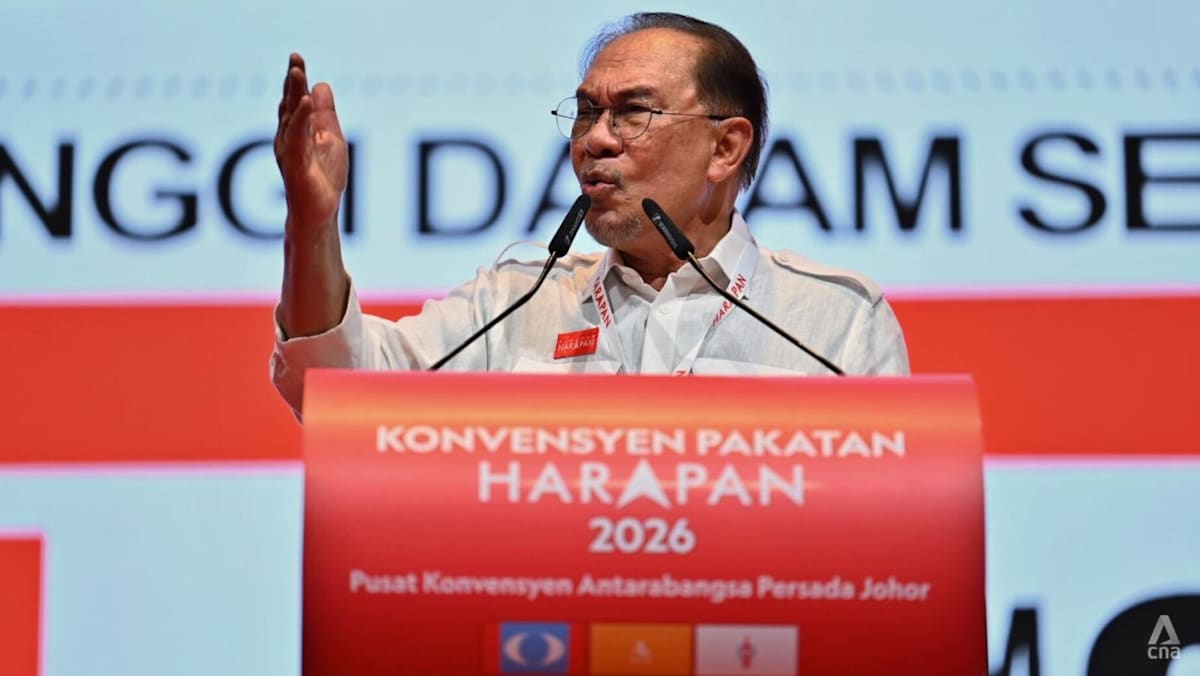
In recent weeks, Prime Minister Anwar Ibrahim has been forced to respond to growing tensions within his Unity Government as UMNO reshapes its political strategy. At a Parti Keadilan Rakyat convention in Johor Bahru on May 17, Anwar warned that his government was prepared to “fight seriously” and suggested that UMNO-led Barisan Nasional (BN) moves were approaching betrayal. He also raised the possibility of nationwide snap polls, even though the next general election is not due until February 2028.
Despite Anwar’s warnings, UMNO has continued to assert itself through a series of state-level political moves, including the sequential dissolutions of the Johor and Negeri Sembilan state assemblies this week. The latest developments underline the party’s efforts to regain momentum in key strongholds and test the durability of the governing alliance.


The Johor state assembly was not due to expire until April 2027, but on June 1 Chief Minister Onn Hafiz Ghazi dissolved it after an audience with the Acting Sultan of Johor, Crown Prince Tunku Ismail Sultan Ibrahim. UMNO and BN then announced that they would contest all 56 seats in the state, effectively treating Pakatan Harapan (PH) parties as rivals rather than coalition partners.
Johor is seen as a strategic battleground where the numbers favor UMNO’s early election strategy. Before the dissolution, the party held a dominant position in the state assembly, controlling 40 seats and maintaining a two-thirds majority. By moving early, UMNO appears to be relying on its traditional organizational strength, incumbent advantage, and the historically lower turnout seen in state-only elections.
That turnout factor is significant. In Johor’s last state election in 2022, voter participation was only 54 percent, a level that tends to benefit parties with established grassroots machinery and strong local networks. UMNO’s decision to push for an early contest suggests confidence that it can outperform a fragmented opposition and preserve its control of the state.
The party’s calculations may not stop with Johor. According to UMNO sources, the coalition is also considering calling snap elections in neighboring Melaka, another stronghold where the state assembly must be dissolved before December. If that happens, UMNO would be able to force a quicker political test in two of its most important bases.
For Anwar and his PH-led government, the timing presents a challenge. By accelerating elections in Johor and potentially Melaka, UMNO could limit the time available for PH to strengthen its ground operations and expand its political presence in regions where the opposition has historically faced difficulty. The strategy also increases pressure on the unity coalition, exposing the tensions between its component parties while forcing Anwar to defend the stability of his administration.
The latest developments suggest that UMNO is no longer waiting for the national election cycle to work in its favor. Instead, it is using state elections to reassert relevance, shape political momentum, and test the resilience of Anwar’s coalition before the next federal vote.