World Environment Day 2026: 5 Fun Ways to Teach Children to Care for the Environment and Love Nature

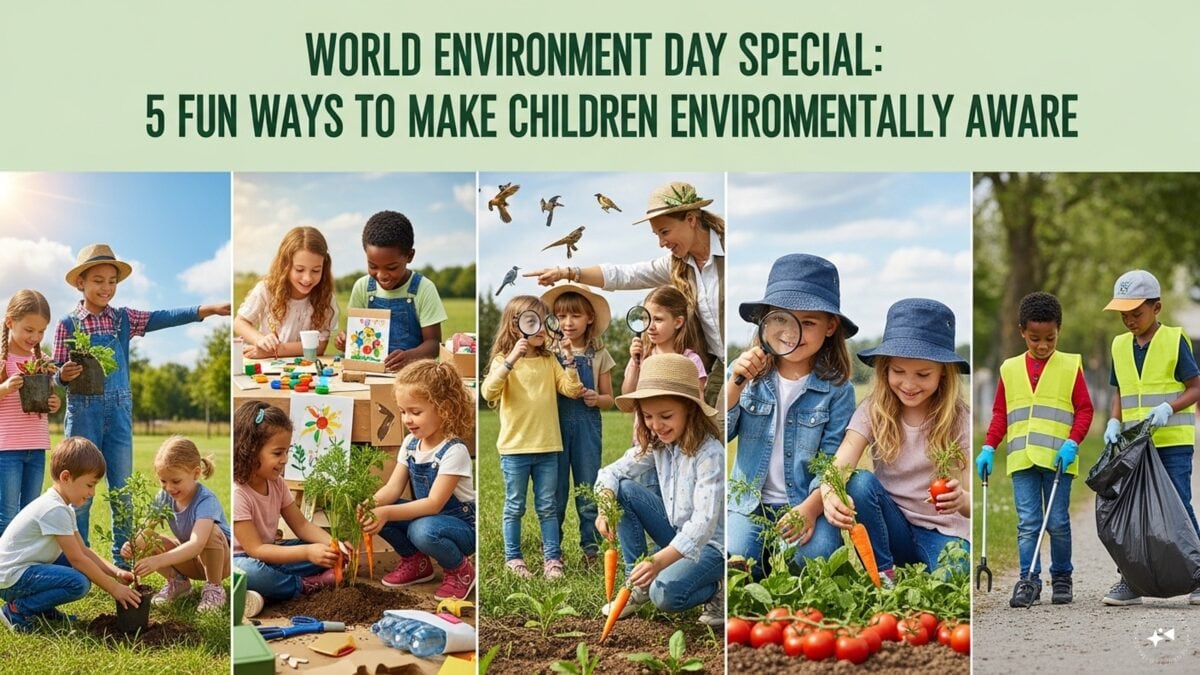
World Environment Day, observed every year on June 5, is a meaningful occasion to teach children the importance of protecting nature and building responsible habits from an early age. The article highlights that environmental awareness should not be limited to adults; children can become strong future guardians of the planet if they grow up with a sense of love and responsibility toward the natural world.
One of the simplest ways to involve children is by making tree planting a family activity. Giving them a small plant to grow and care for can help them understand patience, responsibility, and the joy of watching something living thrive because of their efforts. This hands-on experience can create a lasting emotional connection with nature and make environmental care feel personal and rewarding.

The article also suggests taking children on nature walks to nearby parks, gardens, or green spaces. During such outings, parents can point out different trees, plants, birds, butterflies, and other natural elements. Seeing nature up close often has a stronger impact than learning about it only through books or screens, helping children develop curiosity and appreciation for the environment.
Another useful activity is turning waste segregation into a game. By using colorful bins and asking children to sort dry and wet waste correctly, families can teach the basics of garbage management in a fun and memorable way. This helps children understand that proper waste disposal is an important part of keeping homes and communities clean.
DIY recycling projects are another engaging method. Children often enjoy creating new items from old plastic bottles, cardboard boxes, and used containers. These activities encourage creativity while also teaching the value of reuse and recycling. They show children that many discarded items can be transformed into something useful instead of being thrown away.
The article further recommends building simple eco-friendly habits into daily life. Children can be taught to turn off taps while brushing, switch off lights in empty rooms, and avoid wasting water. These small practices may seem basic, but they can shape long-term responsible behavior when introduced in a playful and encouraging way.
Overall, the message is clear: World Environment Day is not just about awareness campaigns, but about creating meaningful experiences for children that help them develop a lifelong respect for nature. Through planting, exploring, sorting waste, recycling, and learning everyday conservation habits, families can raise environmentally conscious children who are better prepared to protect the planet in the future.


/https://s01.video.glbimg.com/x720/14641340.jpg "Spain unveils World Cup squad without any Real Madrid players for the first time")