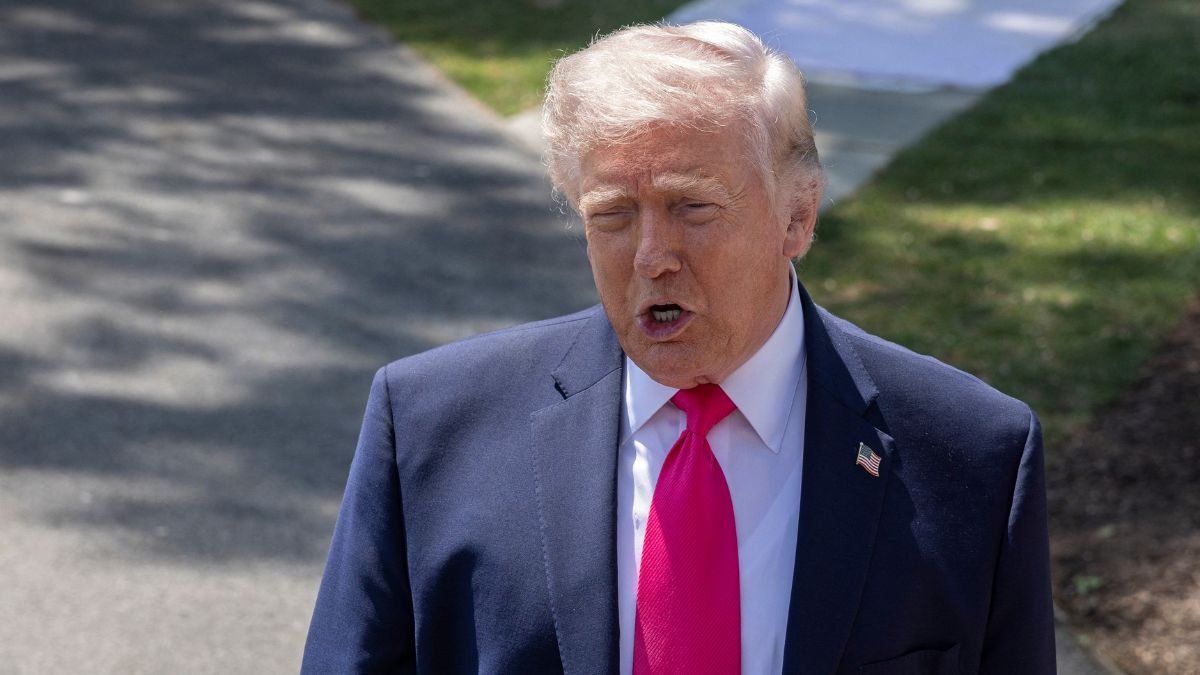
President Donald Trump’s claim that a “perfect” score on a cognitive test proves his “extreme intelligence” drew immediate criticism from a medical expert who said the exam is not an IQ test. Trump posted late Sunday, May 31, that he received a perfect 30 out of 30 on the Montreal Cognitive Assessment, or MoCA, after his latest physical at Walter Reed National Military Medical Center. He said the result showed exceptional intelligence and argued that all future presidential and vice-presidential candidates should be required to take similar cognitive exams.
Dr. Jonathan Reiner, a professor of medicine and surgery and an interventional cardiologist at George Washington University, responded that the MoCA is a dementia screening tool used to detect cognitive impairment, not a measure of intelligence. He said a score of 26 or higher is considered normal and that the test does not include “high difficulty” questions. Reiner noted that Trump’s score of 30 simply places him in the normal range for the screening.


The MoCA was created by Canadian neurologist Dr. Ziad Nasreddine as a brief test for mild cognitive impairment and early signs of Alzheimer’s disease. The 30-point exam usually takes about 10 minutes and includes tasks such as drawing a clock, copying a cube, naming animals and answering memory and attention questions. Scores above 26 are normal, while lower scores can indicate mild, moderate or severe impairment.
Trump has repeatedly highlighted his cognitive test results as proof of mental sharpness. During his first term, he publicly described portions of the exam, saying he was asked to repeat simple words and then received praise for doing so. Former White House physician Dr. Ronny Jackson said in 2018 that the test was administered at Trump’s request. Nasreddine has also said Trump has sometimes described animals or items not actually included on the exam.
Reiner also raised broader concerns about Trump’s health report and questions left unanswered by White House physician Dr. Sean Barbabella. Among them were why Trump had taken the MoCA again after multiple prior tests, whether the president’s reported daytime fatigue had been addressed, why he was taking a higher-than-typical aspirin dose, and why the appointment was described as a “semi-annual physical.” The White House did not publicly respond to those questions.
Reiner also criticized an artificial intelligence-generated estimate of Trump’s “heart age,” saying it is not a clinically used medical tool. The exchange added to ongoing scrutiny of Trump’s health claims, his public presentation of cognitive testing, and his repeated efforts to frame routine screening results as evidence of extraordinary intelligence.