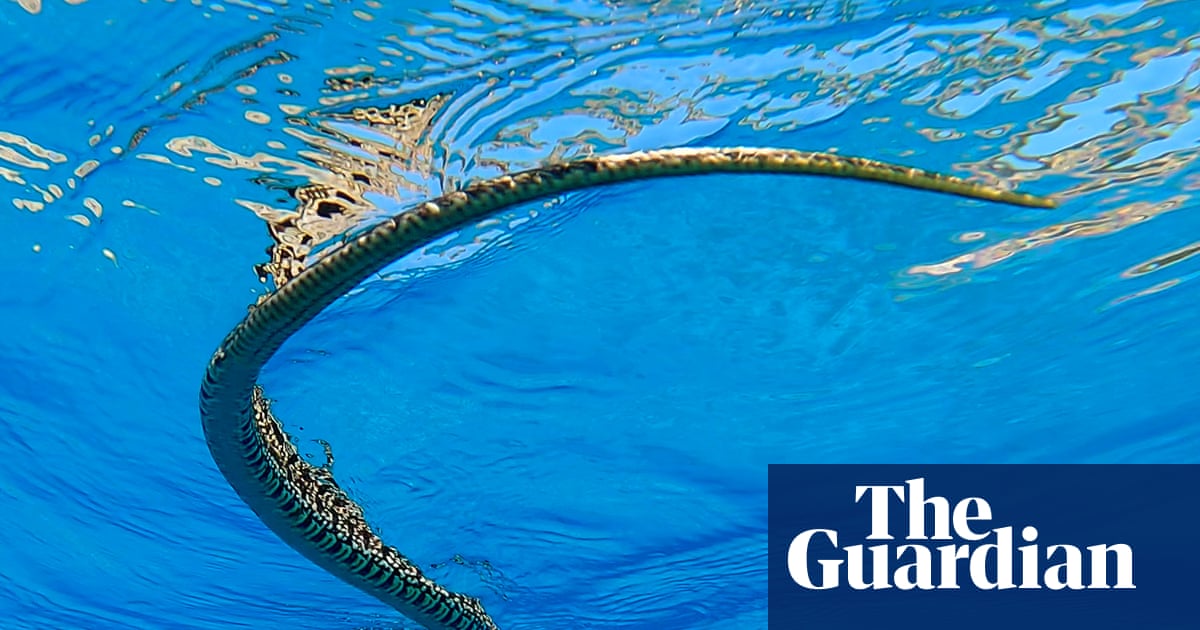
Spanish researchers say a grainy video shot in April 2024 provides the first clear proof that horseshoe whip snakes are swimming from Ibiza to the nearby islet of Santa Eulària, about 450 metres away, expanding an invasion that has already devastated the island’s native wall lizard populations. The snakes, a non-venomous species from mainland Spain, have been moving into Ibiza for roughly two decades, likely hitching rides inside imported ancient olive trees brought in by wealthy property owners for landscaping. Those trees, with hollows and crevices, appear to have offered ideal shelter for hibernating snakes and their eggs, allowing the species to spread rapidly across the island. Scientists now estimate the snake is present on at least 90% of Ibiza, and forecast it could reach the entire island by the end of 2027.
The impact on the Ibiza wall lizard, one of the Balearic Islands’ most distinctive species, has been severe. Once common and celebrated for their bright colours, the lizards are now under major threat. In October 2022, the International Union for Conservation of Nature reclassified the Ibiza wall lizard from “near threatened” to “endangered.” Researchers say the reptiles are more than just an emblem of the islands: they are a keystone species that help control insects, including agricultural pests, while also contributing to pollination and seed dispersal. Their disappearance could therefore affect local ecosystems far beyond the loss of a single animal.


The Balearic regional government, working with the Centre for Ecological Research and Forestry Applications and other groups, says more than 3,500 horseshoe whip snakes were captured in Ibiza last year, and more than 16,000 have been culled since 2016. Even so, the snakes are increasing in size and number. On Ibiza, some have grown to more than 2 metres long and can weigh 2.5 times as much as mainland specimens, suggesting they are thriving in the absence of natural controls. Researchers believe competition for food may have pushed them to spread from the main island to the surrounding islets.
The consequences have already been disastrous on some of those smaller islands. On Santa Eulària, scientists recorded 72 lizards in 2016 but only three in 2023. Today, the unique lizard populations on 10 islets, including Santa Eulària, are considered extinct. Horseshoe whip snakes have also been found on neighbouring Formentera, raising further alarm among conservationists.
To protect what remains, a captive breeding programme has been launched at Barcelona zoo, drawing lizards from eight different populations in a “Noah’s ark” effort to preserve genetic diversity. Researchers warn, however, that the small size of the islets and the snakes’ appetite make recovery difficult. They compare the crisis to Guam, where invasive brown tree snakes caused the collapse of native bird species. Yet on Ibiza, there is still one unexpected refuge: urban areas. In cities, snakes are more likely to be killed by people or run over by vehicles, allowing some lizard populations to survive. Still, scientists describe the broader loss as both an ecological emergency and a cultural tragedy, with unique island lineages disappearing forever.