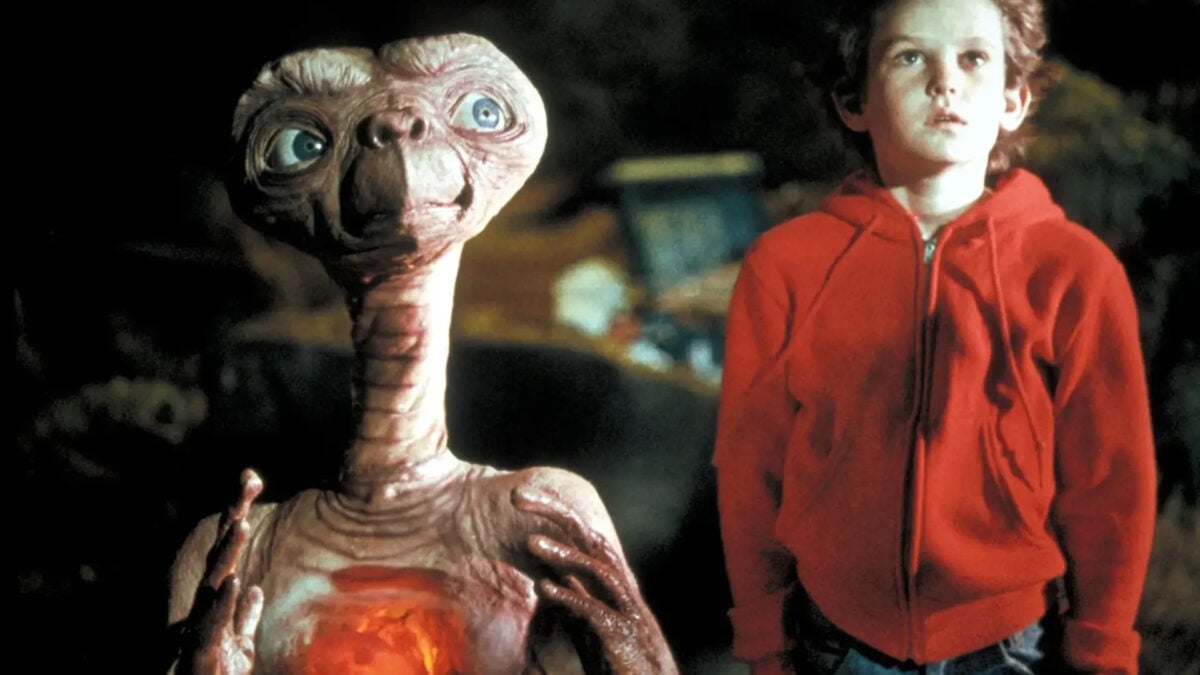
A new book is set to explore the origins of Steven Spielberg’s E.T. the Extra-Terrestrial by tracing the unrealized project Night Skies, the alien horror film that was originally conceived as Spielberg’s follow-up to Close Encounters of the Third Kind. Titled Stranded on Earth: How Night Skies Became E.T. the Extra-Terrestrial, the book is written by Max Evry, who previously produced an oral history of David Lynch’s Dune. According to the publisher’s announcement, Evry interviewed a wide range of Spielberg collaborators, including actors and other industry insiders, to reconstruct how the abandoned concept evolved into one of the most beloved sci-fi films of the 1980s.
The book will examine not only how Night Skies contributed to the making of E.T., but also how pieces of the scrapped project influenced other major genre titles from the same era, including Poltergeist and Gremlins. Beyond those individual films, the project is expected to place Night Skies within the broader landscape of 1980s sci-fi horror, showing how an unrealized idea helped shape a generation of popular cinema. Evry described Night Skies as long being treated like a minor footnote in the shadow of E.T., while arguing that its short and complicated development history is just as compelling as the story of the film that eventually emerged.
In the publisher’s statement, Evry said that the deeper he researched the subject, the larger and more surprising the story became. That approach mirrors his earlier work on Dune, where he expanded a well-known production story into a much wider account of creative development and industry history. The new book appears to follow a similar method, combining archival research and first-hand interviews to uncover how discarded concepts can leave a lasting mark on Hollywood storytelling.
Stranded on Earth is scheduled to arrive in North America on October 6 and in the UK on November 12. The timing may appeal to readers already interested in Spielberg’s body of work, especially those following recent renewed attention around his films. For fans of science fiction, horror, and behind-the-scenes movie history, the book promises a detailed look at how a shelved alien project became part of the creative DNA of several influential 1980s classics.
Ultimately, Stranded on Earth aims to turn a little-known development detour into a fuller history of how Hollywood ideas evolve, disappear, and reappear in unexpected forms. By focusing on Night Skies and its legacy, the book offers a fresh angle on Spielberg’s career and on the interconnected nature of genre filmmaking during one of the most influential decades in modern cinema.