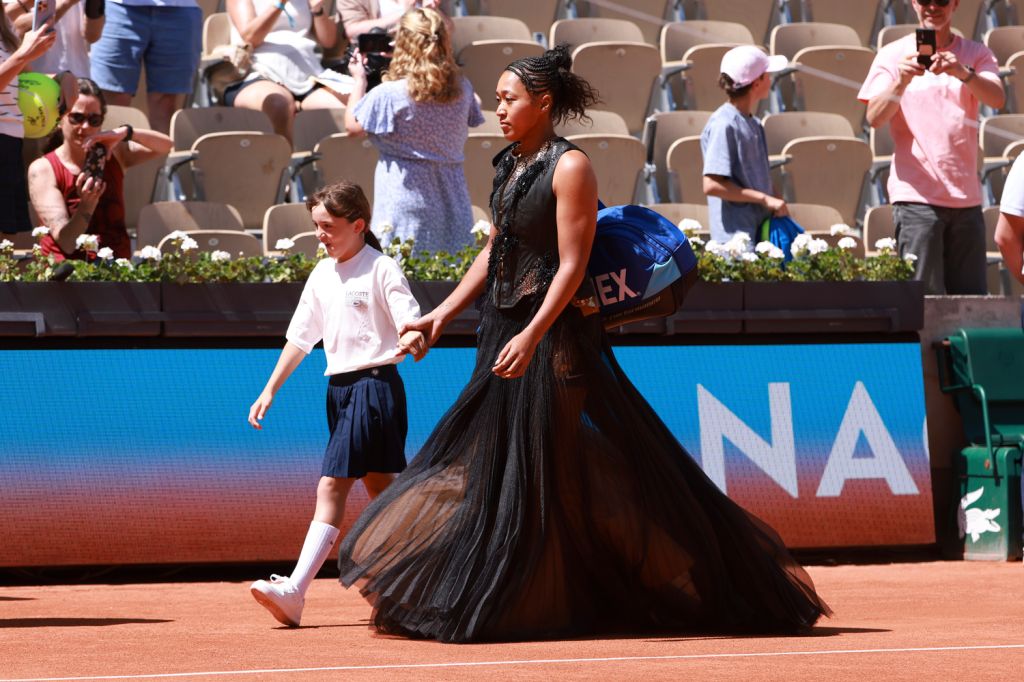
Naomi Osaka made a strong statement at the 2026 French Open, combining high fashion, athletic excellence, and cultural advocacy. On May 26, she arrived in Paris wearing a custom black Kevin Germanier outfit that transitioned from a corset-style look into a shimmering gold Nike dress for her opening match. The sparkling mini dress, complete with a ruffled peplum and sequins, was inspired by the Eiffel Tower lit up at night, according to Osaka. She later won her first-round match against Laura Siegemund in straight sets, reinforcing her reputation for delivering both style and performance.
Osaka has long used fashion as part of her identity on and off the court. She has said that because she does not talk much, clothing gives her another way to express herself. Her style choices are not simply about aesthetics; they reflect her personality, her lived experiences, and her place in tennis culture. She has also credited Serena and Venus Williams as major inspirations and hopes that younger fans can feel empowered when they see her outfits. For Osaka, fashion is not an accessory to tennis but part of the story she tells each time she steps onto the court.

Beyond fashion, Osaka continues to use her platform to highlight representation and support for Black tennis players. Ahead of Roland Garros, she and Taylor Townsend co-hosted The Black Party at SoHo House Paris, a gathering that celebrated Black athletes competing at the tournament. Among the attendees were Coco Gauff, Gaël Monfils, Asia Muhammad, and Chris Eubanks. The event reflected Osaka’s awareness of the isolation she felt growing up in a sport where Black players were underrepresented. By creating space for connection and celebration, she is helping foster community in tennis.
When she shared photos from the dinner, Osaka wrote, “Our presence is a present,” underscoring the importance of visibility and belonging. She also responded to online criticism of the event without apologizing for honoring Black players. Her stance reinforced a broader message about the value of celebrating identity and achievement in a sport still expanding its diversity.
Osaka’s influence goes beyond championships and match results. She is a four-time Grand Slam champion, a mother, a mental health advocate, and a cultural figure who blends performance with purpose. At the French Open, she once again showed that she can command attention through fashion, compete at a high level, and advocate for inclusion at the same time.