The article argues that the United States is moving toward a more aggressive stance against Cuba, with former and current Trump-era policies presented as part of a broader effort to weaken and possibly reshape the island. It says Secretary of State Marco Rubio has signaled little real interest in a negotiated settlement with Havana, while the Trump administration has intensified pressure through sanctions and an oil blockade that has worsened an already severe economic crisis.
The piece claims Washington is building a case for confrontation by accusing Cuba’s former president Raúl Castro of conspiracy and murder linked to the 1996 shootdown of two aircraft, comparing this to past U.S. actions against Venezuela’s Nicolás Maduro. It also says the administration has circulated intelligence suggesting Cuba has acquired more than 300 drones and could use them against the U.S. base at Guantánamo Bay. The author dismisses this as implausible and compares it to previous U.S. justifications for war, including claims about weapons of mass destruction in Iraq.
The article describes Trump’s own statements about Cuba as openly expansionist, portraying them as evidence that he sees the island as something to be taken or controlled. It notes the arrival of the USS Nimitz in the Caribbean and suggests this fits into a broader military buildup. The author argues that setbacks for the United States abroad may be making Trump and his team more, not less, inclined to pursue a show of force in Cuba.
A major theme is the impact of economic warfare on ordinary Cubans. The article says years of sanctions, combined with recent fuel shortages and inflation, have left people exhausted and desperate. It gives examples such as sharply rising petrol prices, extremely low salaries, and hospitals struggling to obtain medicines. Some residents blame Trump directly, while others blame the Cuban government or both. The piece quotes Cubans who say people are living on hope but can no longer endure the hardship.
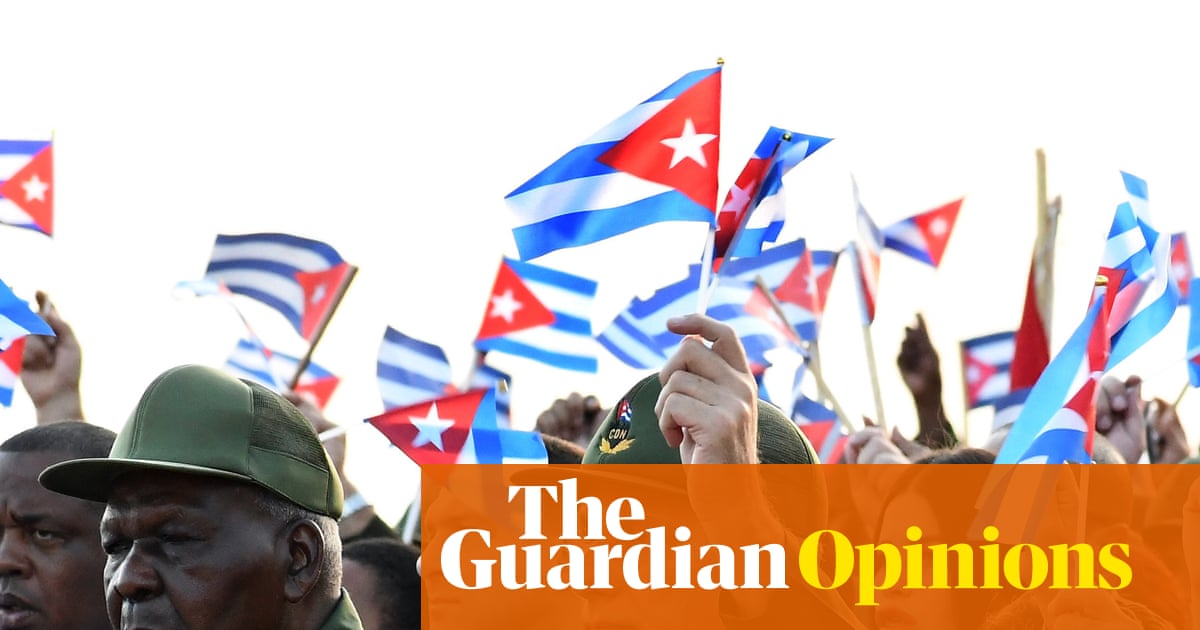
The author argues that these conditions may be part of Washington’s strategy: to make life so unbearable that Cubans accept almost any political change promised as relief. At the same time, the article says Cuba still has a tradition of defiance and national resistance. It suggests that if the U.S. were to attempt invasion or occupation, Cubans would resist, even if the country is far weaker militarily than the United States.
The article concludes that Trump’s likely goal is not liberation but control and profit. It warns that a U.S. takeover could open Cuba’s economy to American corporations and lead to the privatization or exploitation of valuable sectors, including healthcare. In the author’s view, ordinary Cubans would bear the destruction, while U.S. elites would benefit from the gains.