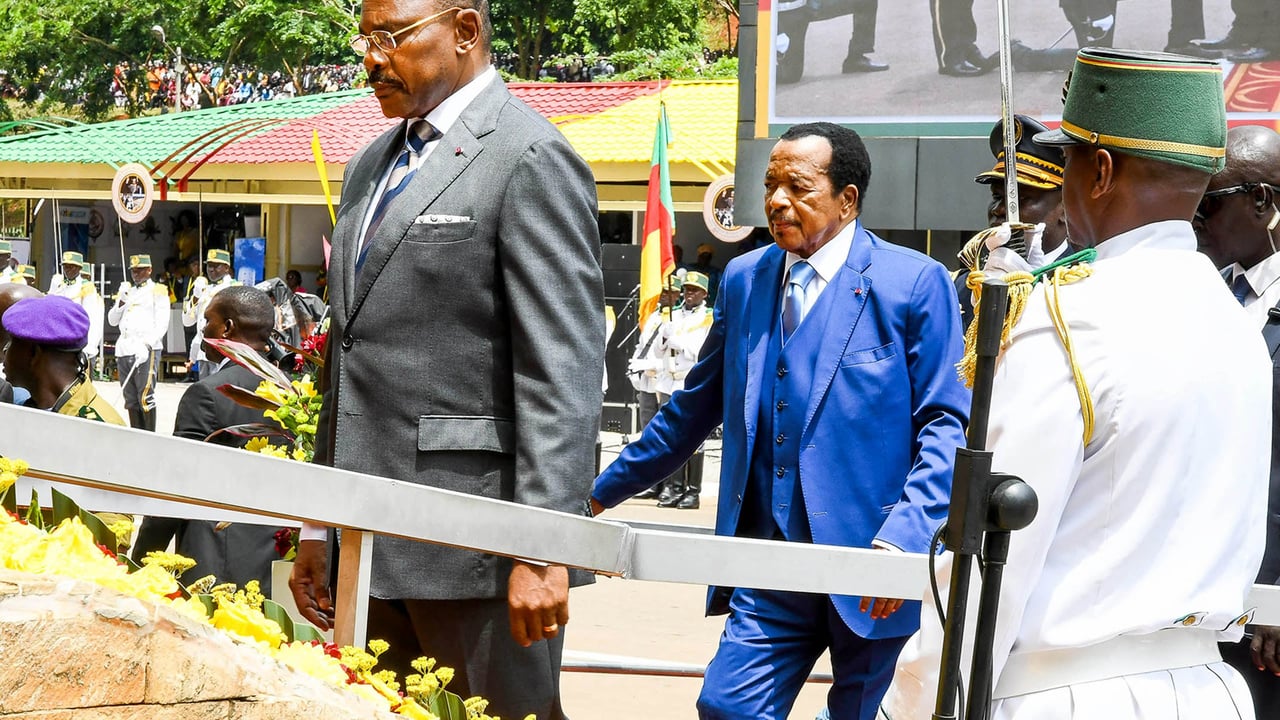
While presiding over the traditional reception held at the presidential palace after the Unity Day parade, Cameroon’s head of state experienced a sudden bout of illness, according to the brief report. The incident occurred during the official festivities that followed the national celebration, drawing attention to the president’s condition and the atmosphere behind the scenes at the event.
The reception is normally one of the key ceremonial moments marking the end of the parade, bringing together senior officials, invited guests, and members of the diplomatic and political establishment. This year’s gathering, however, was marked by concern after the president reportedly became unwell while carrying out his role as host. The report presents the episode as taking place in the context of the country’s traditional Unity Day celebrations, a major national occasion in Cameroon.
The word “coulisses,” or “behind the scenes,” suggests that the account focuses not only on the public ceremony but also on the less visible circumstances surrounding the event. It implies that something unexpected happened during the reception, even though the official program had begun in a formal and orderly manner. The report does not provide further details about the nature or severity of the malaise, nor does it indicate whether the president received immediate medical attention or whether the event was interrupted.
Unity Day is a significant annual event in Cameroon, centered on national cohesion and state ceremony. The presidential reception that follows the parade is a symbolically important part of the day, often attended by high-ranking authorities and closely watched by the public. Any sign of discomfort or health difficulty involving the head of state therefore attracts particular attention, especially during an event of such visibility.
The short report highlights the moment as unexpected and noteworthy, framing it as a development that took place in the formal setting of the presidential palace. It does not mention any official statement from the presidency, nor does it offer confirmation beyond the account that the president suffered a malaise. As a result, readers are left with a limited but striking description of an incident that disrupted the usual ceremonial tone of the day.
Given the prominence of the event, the report is likely to prompt interest in the president’s health and in whether the reception continued as planned. However, based on the available text, only the basic fact of the reported malaise is clear. No additional context, diagnosis, or follow-up information is included in the passage.
The incident unfolded during one of Cameroon’s most visible state occasions, making the report especially sensitive. It places the president at the center of an unplanned moment during a highly symbolic national celebration, underscoring how quickly an official ceremony can shift from protocol and pageantry to concern and uncertainty.