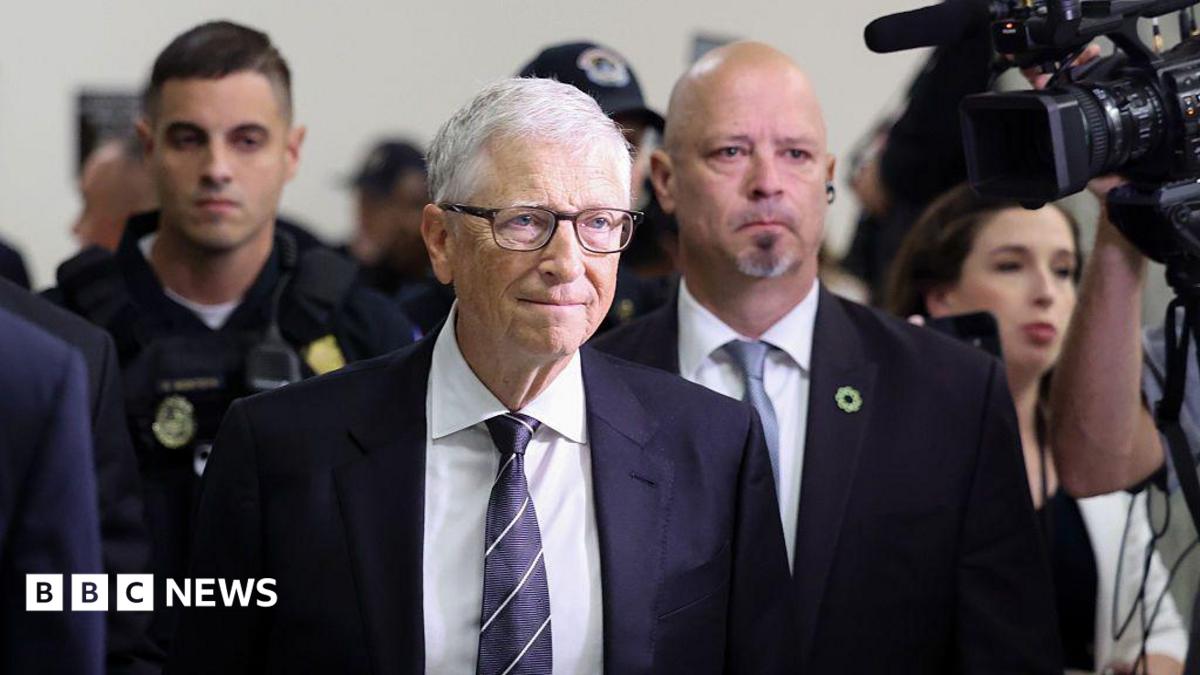
Bill Gates told a committee that Jeffrey Epstein tried to exploit knowledge of Gates’s infidelities and other false claims to pressure him into renewing their contact. In his opening statement, Gates said Epstein used “information about my infidelities” along with “many lies” to push him to re-engage. Gates said his association with Epstein began in 2011, three years after Epstein was convicted in Florida on two counts of soliciting prostitution, and that their interactions centered on possible fundraising for Gates’s global health initiatives.
Gates said he made it clear from the beginning that Epstein would have no role in the work of his foundation and would receive no compensation. According to Gates, the relationship was limited to discussions about philanthropy and fundraising, not foundation operations. He told the committee that he did not view Epstein as someone who would be involved in any official capacity.


The exchange ended, Gates said, after he became convinced that Epstein would not deliver meaningful support. Gates described a 2014 meeting in which Epstein brought together a group he presented as potential donors. After that meeting, Gates said he realized earlier discussions that were supposed to lead to significant philanthropic backing were “a dead-end.” He added that it became clear none of the people in the room wanted to move forward with the proposals.
“At that point, I concluded Epstein would never deliver on his promises,” Gates said. He said he then told Epstein that they would go no further and stopped communicating or meeting with him after that.
The committee’s top Democrat, Robert Garcia, said in a separate update to reporters that Gates was aware Epstein could be convicted for a serious crime, yet still continued interacting with him in hopes of obtaining money for his foundation. Democrats on the committee also said Gates provided the names of the individuals Epstein assembled, though those names were not made public.
The testimony adds a new account of how Gates viewed his relationship with Epstein: not as a partnership, but as a failed attempt to pursue philanthropic support that ultimately ended when Gates concluded Epstein had overpromised and could not help. Gates’s remarks also suggest he was concerned from the outset about limiting Epstein’s involvement, even while maintaining contact for fundraising conversations.
The committee hearing highlighted both the extent and the limits of the connection between the two men. Gates portrayed the relationship as narrowly focused and eventually abandoned, while lawmakers emphasized that he continued meeting with Epstein after the financier’s criminal conviction.