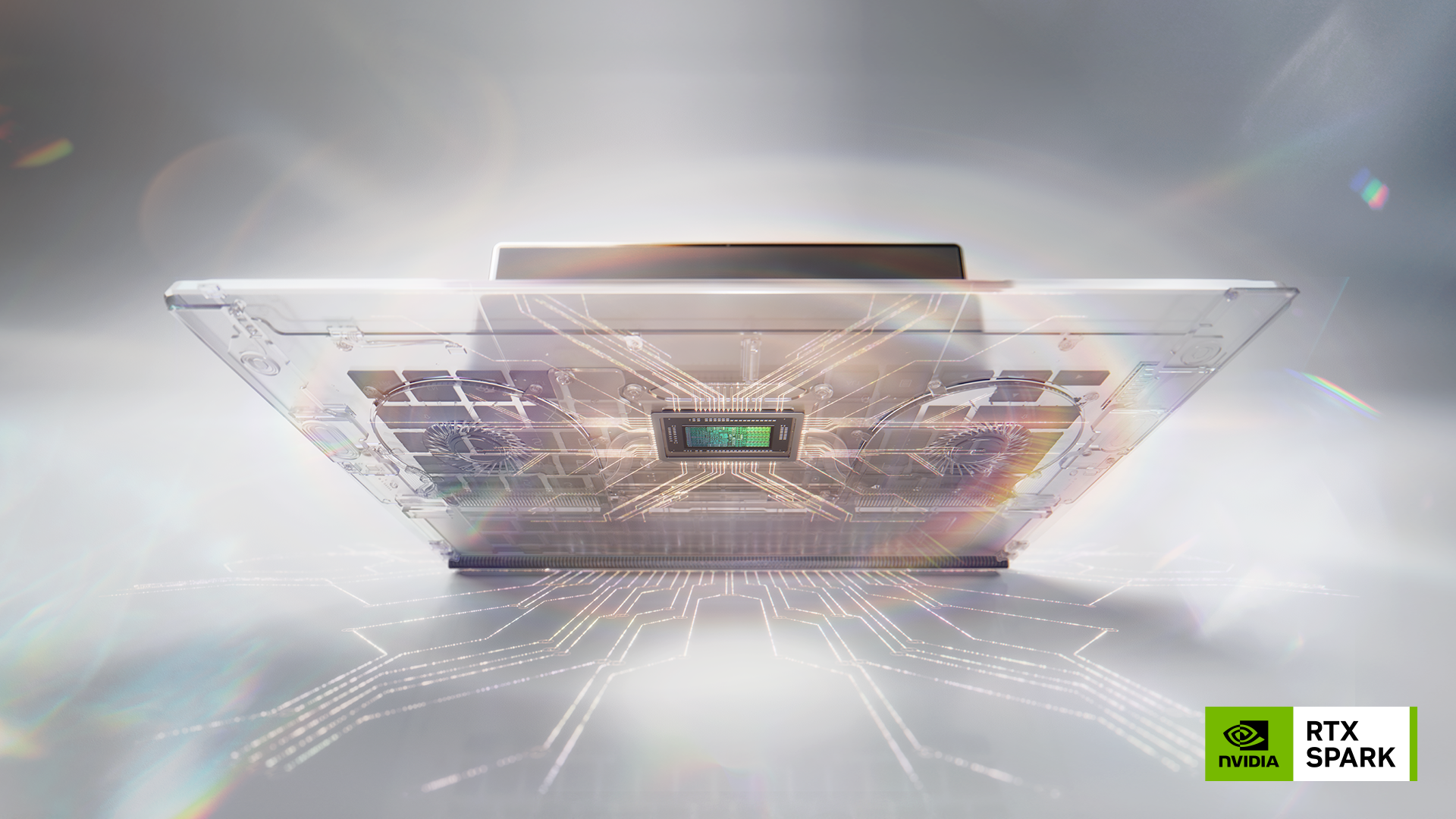
NVIDIA has announced RTX Spark, a new 1-petaflop superchip designed to reshape Windows PCs for the era of personal AI agents. Built on the Blackwell architecture, RTX Spark combines a Blackwell RTX GPU, fifth-generation Tensor Cores, a high-performance Grace CPU, and up to 128GB of unified memory, aiming to bring advanced AI, creative work, and gaming into slim laptops and compact desktops. NVIDIA says the platform is designed to move the PC experience from a traditional tool into an on-device teammate that can understand requests, run workflows, and complete tasks locally.
A major focus of RTX Spark is security and privacy for personal agents. NVIDIA is working with Microsoft to create a native Windows environment for agents, supported by new Windows security primitives and NVIDIA OpenShell. These tools are intended to give users control over what agents can access, how they behave, and when queries should be handled locally or sent to the cloud with personal information masked. The companies say this approach is meant to make on-device AI assistants safer for everyday use on primary PCs.

RTX Spark is also positioned as a full-stack platform for creators, developers, and gamers. NVIDIA says the system can handle very large 3D scenes, 12K video editing, 4K AI video generation, and large language models with long context windows running locally. For gaming, it is aimed at delivering AAA titles at 1440p with high frame rates, while also supporting technologies such as ray tracing, DLSS, Reflex, and G-SYNC. NVIDIA says more than 1,000 games and applications already support RTX technologies, and the new platform will extend those capabilities further.
Adobe is expanding its partnership with NVIDIA to rebuild Photoshop and Premiere for RTX Spark. The company says the updated creative apps will be optimized for the new hardware and software stack, delivering faster AI tools, smoother editing, stronger compositing, and better performance for complex workflows. Adobe’s Substance 3D applications are also expected to run natively on the new platform. NVIDIA says these changes will help creators work faster while using AI-assisted tools in more responsive desktop and portable systems.
RTX Spark devices are expected to come in thin, premium laptop designs as well as small desktop form factors. NVIDIA said the first systems will arrive this fall from ASUS, Dell, HP, Lenovo, Microsoft Surface, and MSI, with Acer and GIGABYTE to follow. The company is also extending its agent strategy beyond personal PCs to enterprise systems through NVIDIA DGX Station for Windows, bringing the same Blackwell-based approach to deskside AI development.